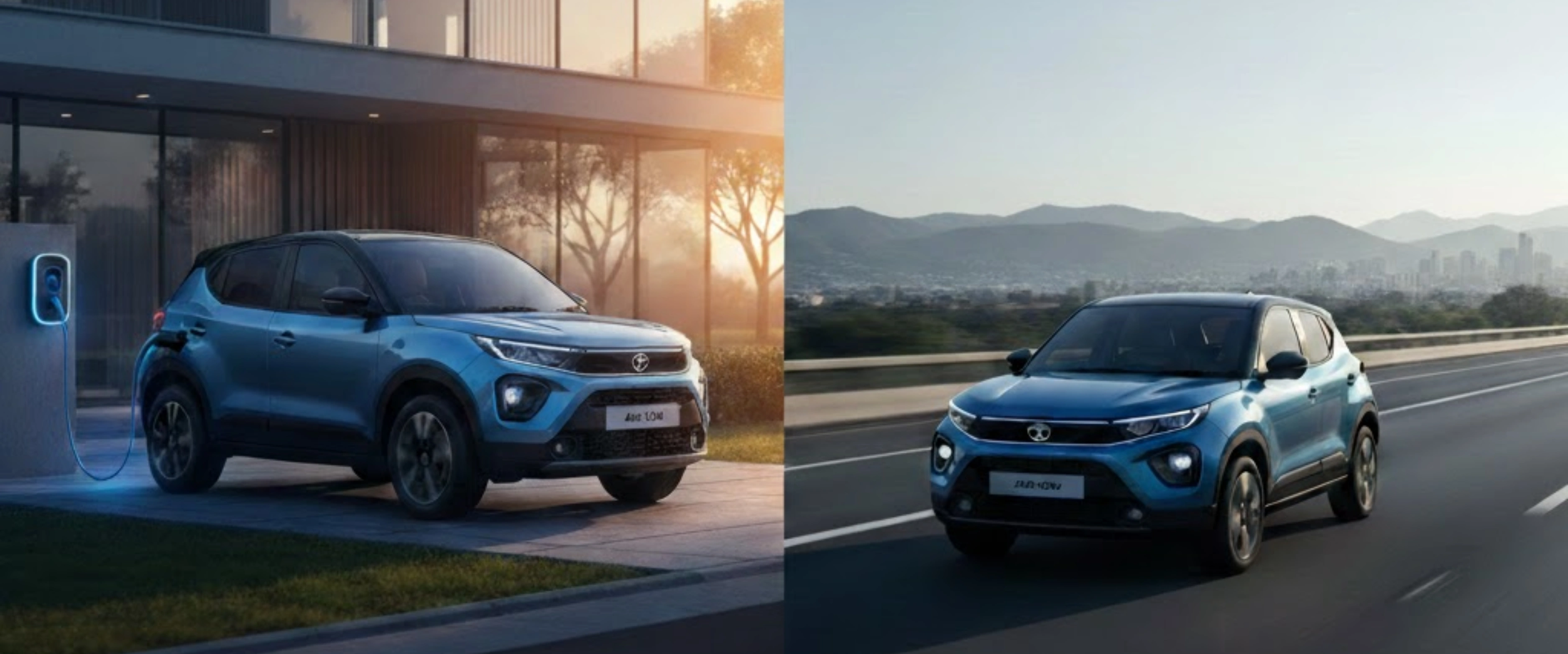
The Tata Punch EV has rapidly become one of the most talked-about electric cars in India. Buyers like it because it is compact yet tough, easy to drive in traffic, economical to run, and built with the safety standards Indian families expect. Whether it is office commuting, school drops, or weekend shopping runs, the car fits naturally into daily life.
With the upcoming 2026 update, curiosity has increased even further. People are not just looking at features anymore — they want practical answers. How many hours will it take to charge from a normal home socket? What range can you realistically expect with AC on? Will the battery remain strong after years of usage? Can it comfortably manage highways and hill stations?
Instead of repeating brochure claims, we focus on real-world situations, ownership experience, and what actually matters after you bring the car home.
Tata Punch EV Actual Charging Time with 15A Home Socket
In most Indian households, the simplest and most accessible way to charge an electric vehicle is through a regular 15-amp wall socket. The good news is that the Tata Punch EV is designed to work comfortably with this setup. You don’t necessarily need expensive charging equipment or special installation to begin your EV journey.
When plugged into a standard home connection, charging is naturally slower than using a dedicated fast charger, but it fits very well into everyday life. Owners typically plug the car in at night, wake up to a full battery, and start the day without visiting a fuel station. For office commuters and routine city users, this method is practical, economical, and stress-free.
Realistic full charging time
25 kWh battery: about 9–10 hours from empty to full
35 kWh (long-range) battery: roughly 13–14 hours
Because cars are rarely driven down to 0%, the actual overnight time is often even less in daily use.
This approach works especially well for:
Overnight home charging
Regular urban commuting
Families that do not want to install a wall box
There are, however, a few basic precautions that make charging safer and more efficient.
Important things to remember
Always use a dedicated plug point with proper earthing
Avoid extension cords or low-quality wiring
Charging duration can vary slightly depending on local voltage stability
For drivers who travel around 30 to 50 kilometers per day, a simple 15A socket usually provides more than enough energy to replenish what was used. In real terms, it means you come home, plug in, and by morning the car is ready again — easy, predictable, and budget-friendly.
Tata Punch EV Battery Life After 5 Years
Battery durability is one of the most common concerns for anyone planning to switch to an electric vehicle. Buyers often wonder whether the range will drop sharply or if expensive replacements will be needed after a few years. In the Punch EV, Tata uses a liquid-cooled lithium-ion battery pack, a technology known for managing temperature better than simpler air-cooled systems. Stable temperature control directly helps in slowing down long-term degradation.
Under normal driving conditions, most owners can expect the battery to retain around 85–90% of its original capacity after five years. Yes, there will be a small reduction in range over time, but in everyday city use it is usually minor and manageable rather than dramatic.
For extra peace of mind, the car comes with a strong factory-backed warranty of 8 years or 1,60,000 km, whichever happens first. This coverage is designed to protect owners from unexpected battery-related expenses and makes long-term ownership far less risky.
Keeping the battery healthy does not require complicated knowledge. A few sensible habits can make a noticeable difference in how well it performs over the years.
Simple practices that help
Try not to charge from 0% to 100% very frequently
For daily usage, staying roughly within the 20%–80% window is ideal
Use fast charging when needed, but avoid relying on it every day
During very hot weather, parking in the shade helps maintain temperature balance
With these precautions, even after half a decade the Punch EV continues to serve as a reliable daily commuter. Most owners still find it perfectly suitable for office runs, school drops, shopping trips, and weekend outings without feeling that the car has become outdated.
Tata Punch EV Good for Long Drives and Hills?
Yes, the Punch EV can manage long drives and hill routes, provided you plan charging stops in advance. It offers a comfortable ride, smooth power delivery, and a quiet cabin that helps reduce fatigue during extended travel.
On highways, the car remains stable at typical cruising speeds. The absence of gear shifts makes acceleration linear and stress-free, which many drivers appreciate during overtakes.
Highway experience
Comfortable cruising around 100–110 km/h
Smooth, predictable acceleration
Low cabin noise for relaxed driving
In hilly terrain, the instant torque from the electric motor makes climbing easier than many petrol cars. Hill Hold Assist adds confidence when starting on steep inclines, and the vehicle performs well on popular tourist routes such as Shimla, Mussoorie, Lonavala, and Ooty.
That said, charging infrastructure in remote areas can still be limited.
Keep in mind
Chargers may be far apart in the hills
Planning breaks around charging points is necessary
For weekend getaways and occasional intercity travel, the Punch EV works very well. It is practical and economical, but it is not designed for extremely long, non-stop highway runs.
Tata Punch EV Range with AC and 4 Passengers
The actual driving range of any electric car changes depending on how it is used. Extra weight, air-conditioning, traffic, and driving habits all influence how far the vehicle can go on a single charge.
When the Punch EV is running with the AC on and carrying four adults, owners can still expect practical numbers that work well for daily travel and short trips.
Expected real-world range
25 kWh battery: about 200–220 km
35 kWh battery: around 280–310 km
Some common situations can reduce the distance slightly.
What affects the range
AC running continuously at low temperatures
Heavy luggage or full cabin load
Hard acceleration and high speeds
Rough or broken roads
Even after considering these factors, the Punch EV usually delivers a stable and predictable range, which helps drivers plan their journeys with confidence.
Tata Punch EV Real World Range: Highway vs City
Official MIDC figures are tested in controlled conditions, so they usually appear higher than what drivers see in everyday use. In real traffic, speed changes, braking, weather, and road quality all influence the final distance you can travel.
Inside the city, electric cars often perform better because slow movement and frequent braking help recover energy through regeneration. On highways, sustained higher speeds consume more battery.
Typical city range
25 kWh: about 230–250 km
35 kWh: roughly 320–350 km
Typical highway range (around 90–100 km/h)
25 kWh: nearly 190–210 km
35 kWh: around 260–290 km
A few smart habits can help you extract better efficiency from every charge.
Tips to maximize distance
Try to keep speed below 95 km/h
Drive in Eco mode whenever possible
Avoid sudden acceleration and hard braking
Like most electric vehicles, the Punch EV generally delivers better numbers in the city than on open highways. Understanding this difference makes trip planning much easier and more accurate.
Tata Punch EV or Tata Nexon EV Base Model: Which Should You Buy?
Many buyers find themselves confused between the Punch EV and the base version of the Nexon EV. Both come from the same brand and offer strong safety, modern features, and electric efficiency, but they serve slightly different needs. The right choice mainly depends on your budget, space requirements, and where you plan to drive most of the time.
The Punch EV suits people who want an affordable entry into electric mobility, especially if the car will be used largely within the city. It is compact, easy to park in tight areas, and ideal for small families or first-time EV owners. Daily office runs, market visits, and short urban commutes are where it truly shines.
On the other hand, the Nexon EV base model fits buyers who can stretch their budget a little more and want extra cabin room, a larger boot, and better comfort on highways. Its bigger size also gives it a stronger road presence, which some customers prefer for intercity travel.
In simple words, if your usage is primarily urban and value for money is the priority, the Punch EV will feel more practical. If you often travel longer distances and want more space and highway comfort, the Nexon EV may justify the additional cost.
Conclusion
The Tata Punch EV is a well-balanced electric car for Indian conditions. It is safe, comfortable, easy to charge at home, and affordable to run. The upcoming 2026 facelift adds better design, more features, and possibly improved efficiency, making it even more attractive.
If your driving is mostly city-based with occasional highway trips, the Punch EV is a smart and future-ready choice.
FAQs
Q1. Can I charge the Tata Punch EV daily at home?
Yes. In fact, regular home charging is the most convenient method for most owners. Plugging in overnight keeps the battery topped up and removes the need for frequent public charging visits.
Q2. Does fast charging damage the battery?
Using a fast charger once in a while is perfectly fine. However, depending on it every day can increase long-term wear. For routine needs, slow or home charging is healthier for the battery.
Q3. Is Punch EV suitable for resale in the future?
Demand for electric vehicles is steadily rising, and Tata’s EV lineup enjoys strong market trust. This helps the Punch EV maintain competitive resale value compared to many other cars in the segment.
Q4. How much does a full home charge usually cost?
For most households, charging from empty to full typically falls in the range of ₹250–₹350, depending on local electricity tariffs and the battery variant.
Q5. Is the Tata Punch EV a good option for first-time EV buyers?
Yes. Its compact size, simple driving experience, and practical range make it one of the easiest cars for newcomers to electric mobility.

Rohit Sharma
AuthorLast updated 6 hours ago