The year 2025 has emerged as a defining phase for electric cars in India. What once felt like a niche segment driven mainly by early adopters has now entered the mainstream conversation. From city commuters to fleet operators and premium buyers, electric cars have steadily gained acceptance across categories.
As we wrap up 2025, India’s EV car sales story reflects strong momentum, evolving consumer confidence, better products, and policy-backed growth. Let’s take a detailed look at how the EV car market performed this year and what trends shaped its journey.
Overall EV Car Market Performance in 2025
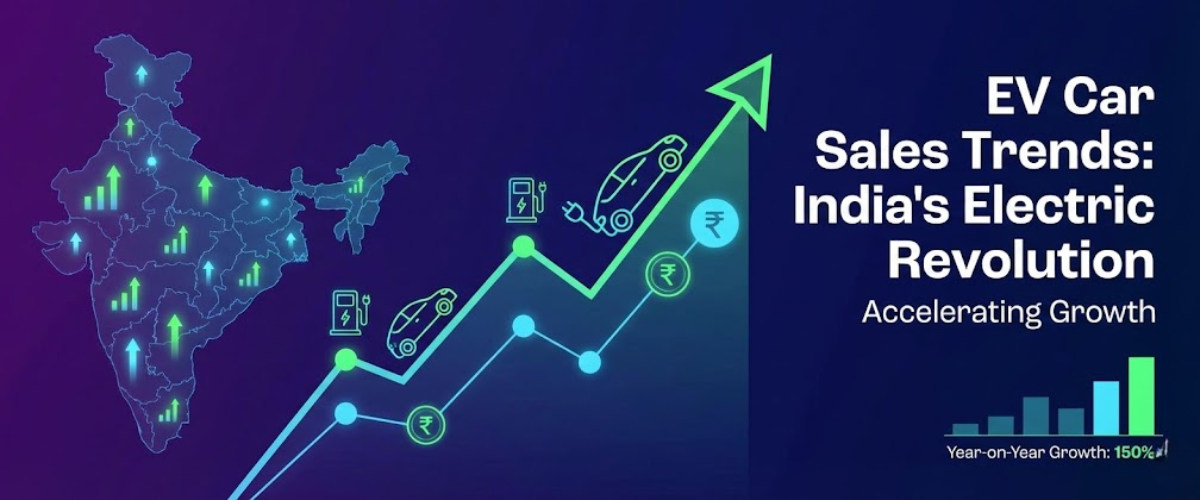
In 2025, electric car sales in India continued their upward trajectory. While two-wheelers still dominate the EV ecosystem, electric passenger cars showed consistent year-on-year growth, driven by:
Improved charging infrastructure in urban areas
Wider product availability across price segments
Growing awareness about lower running and maintenance costs
Government incentives and state-level EV policies
Electric cars are no longer seen only as secondary vehicles; many buyers now consider them primary daily-use cars, especially in metro and Tier-1 cities.
Key Drivers Behind EV Car Sales Growth
1. Expanding Model Choices
One of the biggest changes in 2025 was the increase in EV car options. Buyers could choose from compact EVs, electric SUVs, premium EVs, and long-range family cars. This variety helped address different budget levels and usage needs.
2. Better Real-World Range Confidence
Range anxiety reduced significantly this year. Newer EVs offered:
More efficient battery management
Improved real-world driving range
Faster DC charging support
As a result, consumers felt more confident using EVs for daily commutes and short highway trips.
3. Lower Cost of Ownership
Rising petrol and diesel prices continued to push buyers toward electric alternatives. In 2025, many consumers made purchase decisions based on:
Lower running cost per kilometer
Minimal service requirements
Reduced long-term maintenance expenses
For high-usage customers, EVs proved to be economically sensible.
Urban Markets Continued to Lead EV Adoption
Metro cities such as Delhi NCR, Mumbai, Bengaluru, Hyderabad, Pune, and Chennai remained the largest contributors to EV car sales in 2025. Factors driving urban adoption included:
Availability of public charging stations
Office and residential charging setups
Short daily commute distances
Environmental awareness among city buyers
Tier-2 cities also showed gradual improvement, especially where state governments actively promoted EV infrastructure.
SUVs Dominated Electric Car Sales
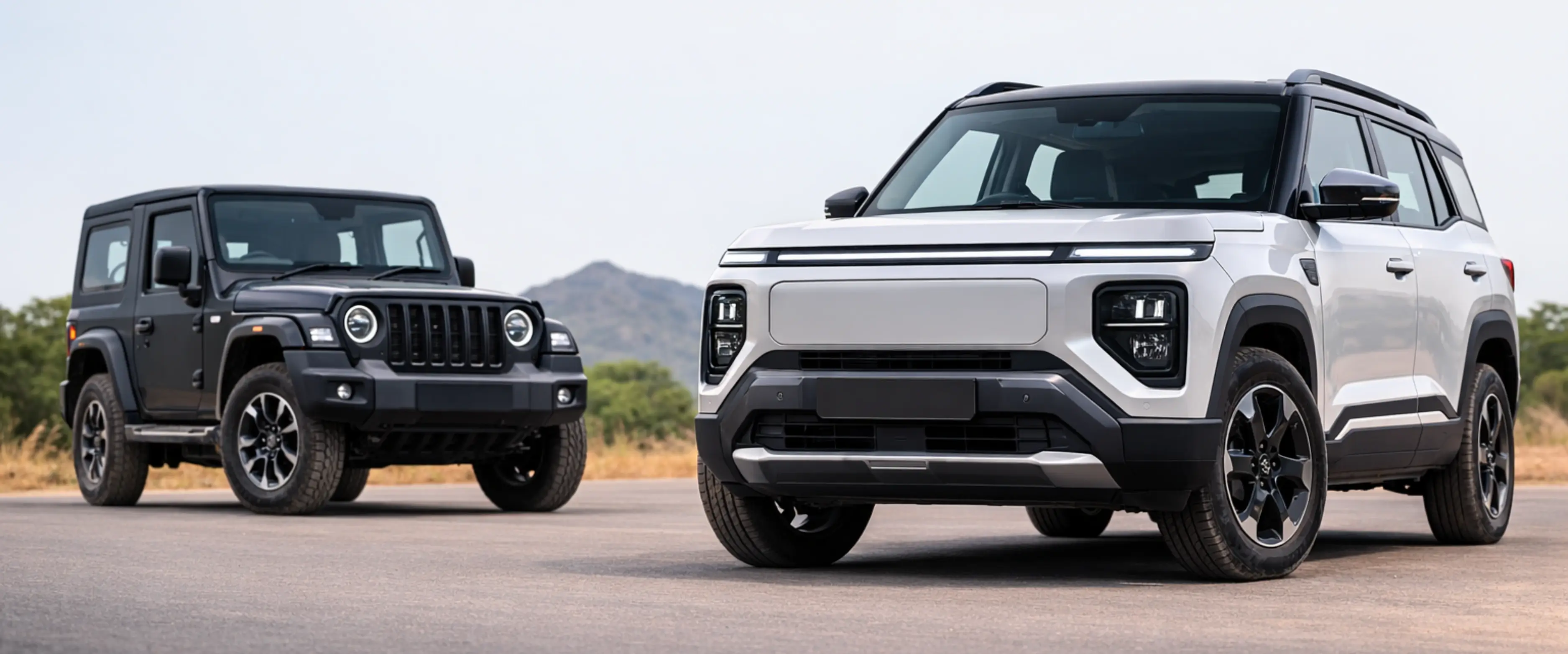
Just like the ICE vehicle market, electric SUVs dominated buyer interest in 2025. High ground clearance, bold styling, and perceived road presence made electric SUVs more attractive to Indian customers.
Compact electric SUVs performed particularly well due to:
Balanced pricing
Practical cabin space
City-friendly size with SUV appeal
This trend clearly indicates that body style preferences remain strong even in the EV era.
Fleet and Commercial Usage Boosted Volumes
Apart from private buyers, fleet operators played a key role in pushing EV car sales this year. Electric cars were increasingly used for:
App-based cab services
Corporate employee transport
Urban logistics and last-mile connectivity
Fleet adoption helped improve EV visibility on roads and contributed to consistent demand throughout the year.
Charging Infrastructure: Progress with Gaps
Charging infrastructure saw noticeable improvement in 2025, especially fast-charging networks along highways and within cities. However, challenges still remained:
Uneven charger distribution across regions
Limited charging access in apartment complexes
Dependence on private charging for most users
Despite these gaps, infrastructure growth kept pace with EV car sales, ensuring adoption did not slow down significantly.
Consumer Mindset Shifted in 2025
One of the most important changes this year was the shift in buyer mindset. EVs were no longer evaluated only on environmental benefits. Buyers focused on:
Driving comfort and performance
Interior quality and features
Brand reliability and after-sales support
Resale value and battery warranty
This mature evaluation approach indicates that EVs have entered the serious consideration stage of the Indian car market.
Challenges That Still Impact EV Car Sales
Despite strong growth, a few challenges continued to affect EV adoption in 2025:
Higher upfront cost compared to ICE cars
Battery replacement concerns
Charging availability in smaller towns
Limited long-distance charging confidence
These factors slowed adoption in rural and semi-urban markets.
What 2025 Means for the Future of EV Cars in India
The EV car sales trend in 2025 clearly shows that India is moving beyond experimentation and toward long-term adoption. Automakers are investing more aggressively in EV platforms, while consumers are becoming more informed and confident.
The foundation laid this year will play a crucial role in:
Wider EV penetration in Tier-2 and Tier-3 cities
More affordable electric car launches
Stronger charging infrastructure expansion
Better resale ecosystem for used EVs
Conclusion
The 2025 wrap-up of India’s EV car sales trend highlights a market in transition—steadily growing, evolving, and gaining trust. While challenges remain, the progress made this year proves that electric cars are no longer just the future of mobility in India—they are very much part of the present.
As product quality improves and infrastructure expands, the coming years are expected to push EV car adoption even further, making electric mobility a normal choice for Indian car buyers.

Rohit Sharma
AuthorLast updated 12 hours ago