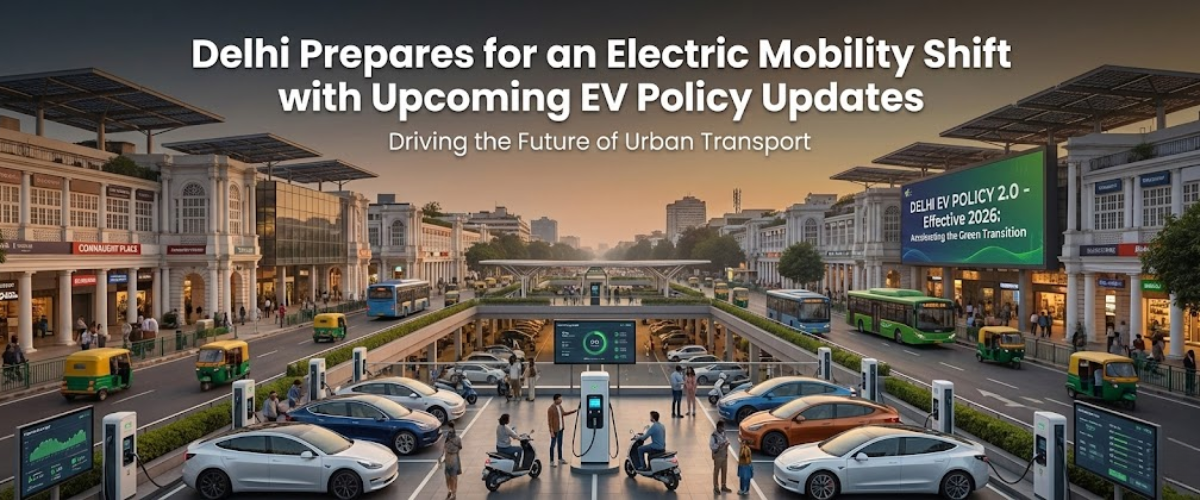
As one of India’s most polluted and densely populated cities, Delhi is at the forefront of driving an electric mobility revolution. In the coming months and years, the capital is poised to reshape its urban transportation ecosystem through ambitious Electric Vehicle (EV) policy reforms aimed at reducing harmful emissions, improving air quality, and accelerating adoption of EVs across vehicle segments.
Why Electric Mobility Matters for Delhi
Delhi’s air pollution remains one of the country’s most significant public health challenges. Vehicular emissions — particularly from petrol and diesel-powered two-wheelers, three-wheelers, and commercial vehicles — contribute heavily to toxic smog and particulate matter levels during winters and peak traffic. The shift to EVs is critical for cutting pollution and improving living conditions for millions of residents.
Beyond environmental benefits, EV adoption supports energy security, reduces dependence on imported fossil fuels, and positions Delhi as a leader in sustainable urban transportation.
What’s New: EV Policy 2.0 & Ongoing Reforms
Delhi’s existing Electric Vehicle Policy, originally introduced in 2020, has been extended multiple times as the government refines its next-generation framework — commonly referred to as EV Policy 2.0. The latest extension carries the policy through March 31, 2026, allowing time for public consultation and stakeholder engagement before final approval.
1. Ambitious Adoption Targets
Under the draft EV Policy 2.0, Delhi aims for 95% of all new vehicle registrations to be electric by 2027 — a bold target signaling a decisive departure from conventional internal combustion engine (ICE) vehicles. This target applies to passenger vehicles as well as commercial segments, including taxis, autos, and light commercial vehicles.
2. Phasing Out Fossil-Fuel Vehicles
Key proposals in the policy draft include:
Ban on new petrol and diesel two-wheeler registrations from 2026, pushing buyers toward electric scooters and motorcycles.
Phasing out CNG auto-rickshaws by 2026, with future permits issued only for electric autos (e-autos).
Transition to all-electric buses and service vehicles like garbage collection fleets by 2027, reducing emissions from high-usage transport categories.
These regulatory shifts are structured to gradually disincentivize fossil-fuel vehicles while ensuring that infrastructure and adoption incentives encourage a smooth transition.
3. Strengthening Charging Infrastructure
An expanded and reliable charging network is critical to EV adoption:
The policy envisions installation of more than 13,000 charging stations, ensuring accessible charging every few kilometers across the city.
Mandatory charging infrastructure in new buildings and public spaces aims to make charging convenient for residents and commuters.
Fast-charging corridors are planned along major arterial roads like the Ring Road and Outer Ring Road, addressing range anxiety for EV users.
These measures are essential in helping EV owners feel confident about daily usage and long-distance connectivity within the NCR region.
4. Financial Incentives & Subsidies
To make electric vehicles more affordable and attractive:
The new policy proposes purchase incentives and capital subsidies for electric two-wheelers, three-wheelers, light commercial vehicles (e-LCVs), and e-trucks.
Scrappage benefits for old ICE vehicles could be offered to accelerate the turnover to EVs and reduce pollution from aging engines.
Plans include tax concessions and financing support such as low-interest vehicle loans, particularly for gig workers and delivery fleets.
Collectively, these measures are crafted to narrow the price gap between EVs and conventional vehicles — a crucial factor influencing buyer decisions.
5. Jobs, Skills & EV Ecosystem Growth
The policy also recognizes the economic opportunities presented by a burgeoning EV ecosystem:
Initiatives aim to create jobs in EV sales, service, charging management, and battery recycling.
Skill development partnerships with institutions are expected to enhance technical workforce readiness for EV maintenance and related services.
By integrating workforce training, Delhi seeks to build not just a cleaner transport system, but also a resilient local EV industry.
Challenges and the Road Ahead
Despite significant planning, Delhi faces key challenges:
Meeting infrastructure targets will require strong public-private partnerships and efficient execution.
Ensuring equitable access to EV incentives, especially for low-income households and informal sector drivers, remains critical.
Consumer education and confidence in EV resale value and battery lifecycle continue to be areas of concern.
However, the extended policy and inclusive consultation process show that Delhi is not merely imposing regulations — it is shaping a collaborative roadmap for its electric future.
Conclusion
Delhi’s upcoming EV policy updates represent a transformative shift toward sustainable urban mobility. With aggressive adoption targets, structural reforms like phased bans on fossil-fuel vehicle registrations, expanded charging infrastructure, and financial incentives, the capital is setting a benchmark for other Indian cities and states to follow.
For automotive enthusiasts, EV manufacturers, fleet operators, and everyday commuters in Delhi, these policy shifts signal a once-in-a-generation opportunity to participate in one of India’s most ambitious transitions to clean transportation.

Rohit Sharma
AuthorLast updated 12 hours ago